 Image courtesy of The Daily Trojan
What’s black and white and read all over? “Life” magazine. The iconic picture magazine that became an inspiration for magazines of all genres.
Tucked away in the second floor east lobby of Annenberg, among a number of students quietly studying and waiting for their professor’s office hours, sits a collection of magazine covers dating back to the early 20th century.
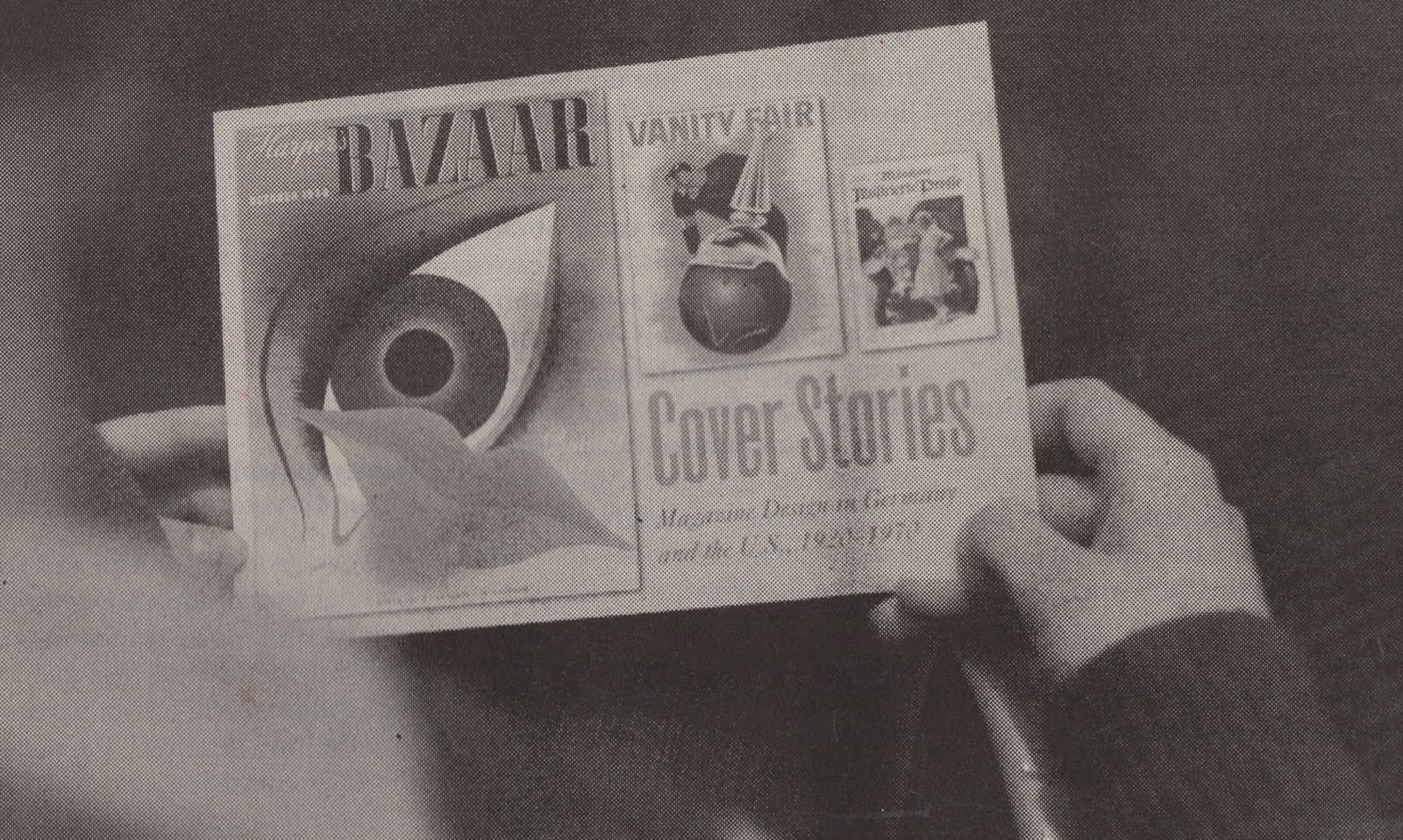
“Cover Stories: Magazine Design in Germany and the US 1920-1970” is a photo exhibit that showcases moments of brilliance in the history of magazines and the interconnectedness between the two Western, industrialized countries.
The exhibit, developed through a collaboration between the University of Erfurt and USC’s Annenberg School of Communication, starts at the inception of magazine media and ends around the time of its decline in popularity.
Along side the colorful covers, hangs descriptions of the era which the covers represent along with evidence of German-American cooperation and inspiration, aided by the increasing forces of globalization. It truly is a small world after all.
The layout, which organizes the covers chronologically as well as by genre illustrates the evolutionary process of magazine media, tying in familiar elements that connect to today.
From graphic design magazines, news and entertainment magazines to fashion and propaganda magazines, history and other stories are told through pictures.
“News to read” transitioned to “news to see,” and magazines served as the bridge between papers and TV.
In its infancy, magazine covers were illustrated, without bold headlines filling every corner of the cover, and only cost about 15 cents.
The American news magazine was born in 1936 when Time, Inc. produced “Life” magazine. It was heavily inspired by the German magazine “BIZ.”
In this new era of reporting the news, pictures had to accompany words and vice versa and would eventually branch into propaganda, especially during World War II.
Magazines also reflected ethnic prejudices. “Ken” magazine reported on the feared Moroccan revolution with a grossly disproportionate caricature of a Moroccan man.
At times, it seems as though German and the US traded news. President FDR was featured on the cover of “Der Spiegel” and Hitler appeared on multiple American covers of both “Look” and “Time.”
They say “a picture’s worth a thousand words,” and judging by WWII era covers, that may just be a huge understatement.
Then rose the entertainment magazine, which combined the best of all literary worlds: novels, pictures, short stories, and articles on every topic imaginable.
These magazines, in order to change to become more appealing to business class in America, became faster-paced.
“Spicy Stories” later turned into “Playboy” (for, as everyone knows, sex sells), and many other entertainment magazines have either survived the test of time or have had a huge impact on pop culture magazines today.
One cover of a beauty magazine touts the headline “Tortures women endure to be beautiful,” accompanied by a picture of a young girl with her hair in an early perming device that looks more like an electric chair.
The links between yesteryear’s magazines and today’s are unmistakable.
Fashion magazines also became popular because fashion was viewed as internationally marketable. With the rise in popularity of fashion magazines came the emergence of the cover girl and the specialization of magazines.
Whether the magazine was devoted to film, men’s interests, or beauty, every one had its own flair. “Vanity Fair” featured politically charged covers while being stylishly intellectual, “Vogue” was, and is, the perennially chic magazine and penultimate guide to fashion. “Harper’s Bazaar” forged into edgy pop culture beauty, and “Life” magazine used black and white covers to contrast with colored illustrations inside.
So, which came first the chicken or the egg? Who copied whom? Is it white with black stripes or black with white stripes? Does it really matter?
Although there is limited evidence of interaction between the two countries, there are plenty of similarities in design and layout.
Current events and national symbols were easy enough for the other country to pick up on, like Statue of Liberty or the Nazi swastika.
According to some, “The New Yorker” founder Harold Ross got inspiration from foreign magazines he studied for layout.
And the case for German-English similarities grow even stronger in references to “Die Neue Linie” (“The New Line,” New Line Cinema, anyone?), “Der Spiegel” (“The Mirror,” as in, the British “Daily Mirror”), and “Vogue” offices in Berlin and New York.
And all of this long before widespread popularity of internet. Can we even imagine what this means for the next fifty years of magazine publishing. What will the exhibit on 1970-2020 magazine covers look like?
Convergence, on-line journalism, and the rise of citizen journalism could prove to be very influential over the years to come.
Perhaps items like Amazon.com’s Kindle, a wireless portable reading device, will become so popular that magazines with cease to exist in paper form and be converted to digital form.
 rachel grice